
A Society of Artists: The Story Behind Ink Society Collective
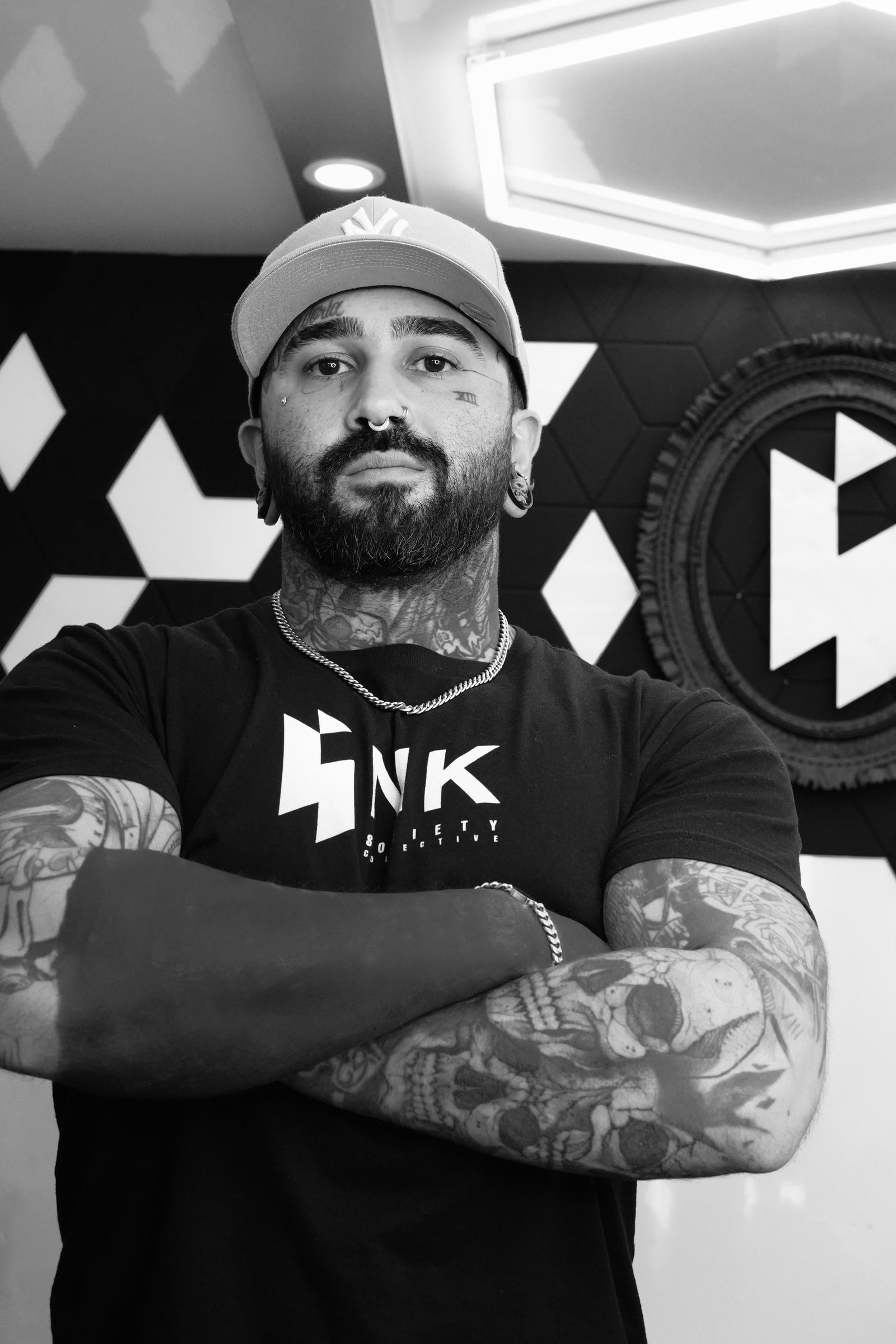

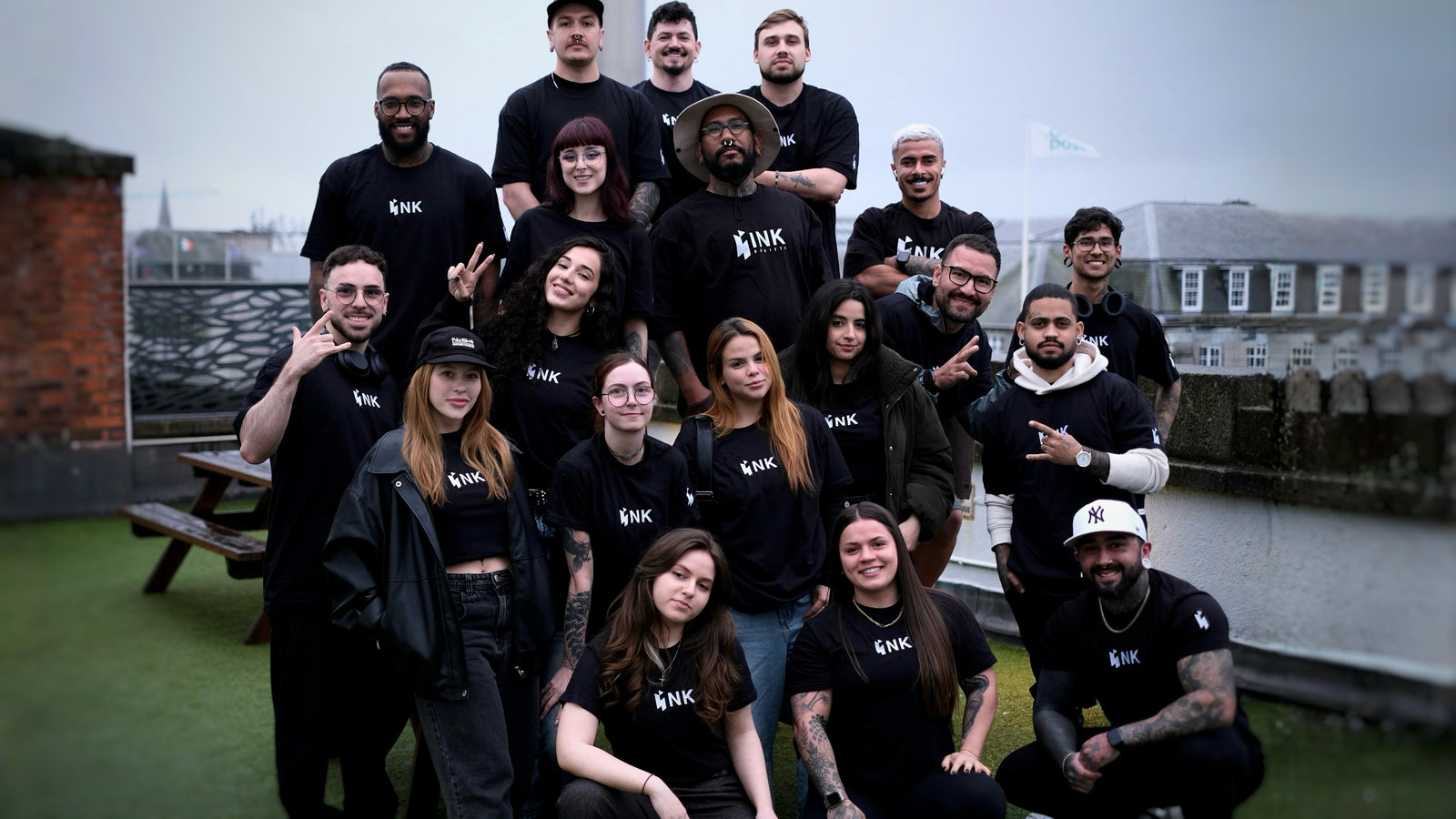





The Dublin studio existed before Ink Society Collective did. For a time, Victor Franceschi worked there alone under VTR Tattoo. In January 2025, he gave the space a new name and a broader purpose.
The change was not about replacing one sign with another. It was an attempt to create the kind of studio Victor had often found missing during his own career: a professional structure where artists could remain independent, share what they knew and feel that they genuinely belonged.
That idea has since grown beyond one room. Ink Society now operates across Dublin, Florianópolis and Cork, while developing new projects through Apparel and the Journal. The scale has changed, but the original question remains the same: how do you build something collective without flattening the identity of the people inside it?
A problem worth solving
Before Ink Society, Victor had experienced tattoo studios from different positions. He had owned spaces, worked within businesses created by other people and seen how strongly an environment could affect the artists inside it.
Some studios provided little more than a workstation. The commercial side was clear, but the creative and human needs of the artist were often treated as secondary. For Victor, that approach overlooked a basic truth: original work requires more than technical ability. It also requires concentration, trust, organisation and enough stability for an artist to take creative risks.
Tattooing carries a particular responsibility. An idea must be developed, adapted to a living body and executed permanently. When the environment is chaotic, unsafe or impersonal, that pressure becomes harder to manage. A studio cannot demand an artist's best work while ignoring the conditions that make that work possible.
After a difficult chapter in a previous studio, Victor spent a period working from home before returning to the Dublin space and rebuilding his routine. The process was gradual. The room first supported his individual career; later, as other artists became part of its daily life, its purpose began to change.
"You cannot expect the best from an artist if they never feel that the space belongs to them too."
Ink Society was born from that shift. It was less a single breakthrough than a series of practical decisions: choosing a new name, inviting people into the space, learning from what worked, correcting what did not and giving the project a purpose beyond one artist's career.
[ISC_MEDIA:image-02]
Why "Society"?
The most important word in the name is not "Ink". It is "Society".
Tattoo artists can work beside one another every day and still remain completely isolated. They may share an address without sharing knowledge, responsibility or any sense that they are building something together.
Ink Society was designed around a different idea. Each artist keeps their own style, clients, career and creative identity. The collective is not there to make everyone look or work the same. Its role is to create a structure in which those differences can strengthen the group.
One artist may understand a technique that another is still learning. A conversation about placement can improve a design. A second opinion can expose a problem before it reaches the skin. The value is not in pretending that everyone knows everything, but in making it normal to teach, ask and exchange.
[ISC_MEDIA:image-03]
"At Ink Society, knowledge is not something we keep. It is something we share."
That approach also shapes the experience of guest artists. A visiting artist is not simply treated as someone occupying a station for a few days. When there is openness on both sides, the visit becomes an opportunity to understand another practice, compare methods and bring a different perspective into the studio.
For Victor, the collective is the sum of the people who have contributed to it, including those who later moved on. That does not mean every relationship lasts forever. It means the institution keeps learning from the people, ideas and experiences that have passed through it.
"Society" therefore has to be demonstrated through behaviour. It appears when artists help one another without treating growth as a threat, when different specialities are respected, and when asking for advice is understood as professionalism rather than weakness.
Freedom needs standards
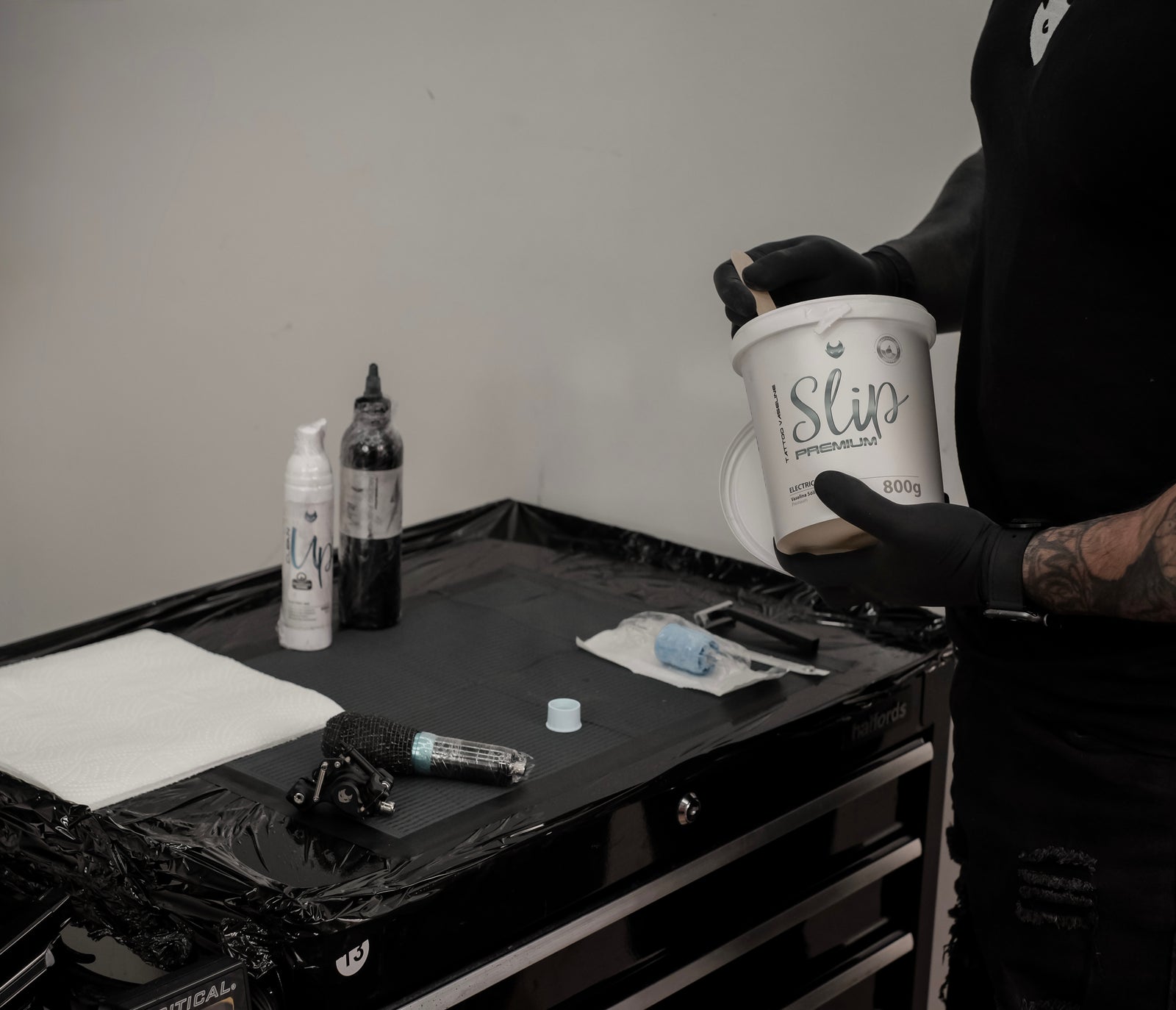
Creative independence only works when the shared environment is protected. At Ink Society, biosafety is the clearest example. It is not a personal preference or a visual detail. It protects the artist, the client, everyone working nearby and the reputation of the collective as a whole.
[ISC_MEDIA:image-04]
The same principle applies to how artists communicate with clients and colleagues. A strong personal style does not excuse poor care. Independence does not mean indifference. The collective can accommodate very different personalities and artistic languages, but safety, respect and responsibility must remain common.
This balance matters because too much control can erase the individuality that makes each artist valuable. Too little structure can allow one person's decisions to damage the experience of everyone else.
The premium standard Ink Society aims for is therefore not defined only by the appearance of its studios. It has to be visible in preparation, cleanliness, honest communication, thoughtful design and the way a client is treated from the first conversation to the finished work.
The artist and the founder
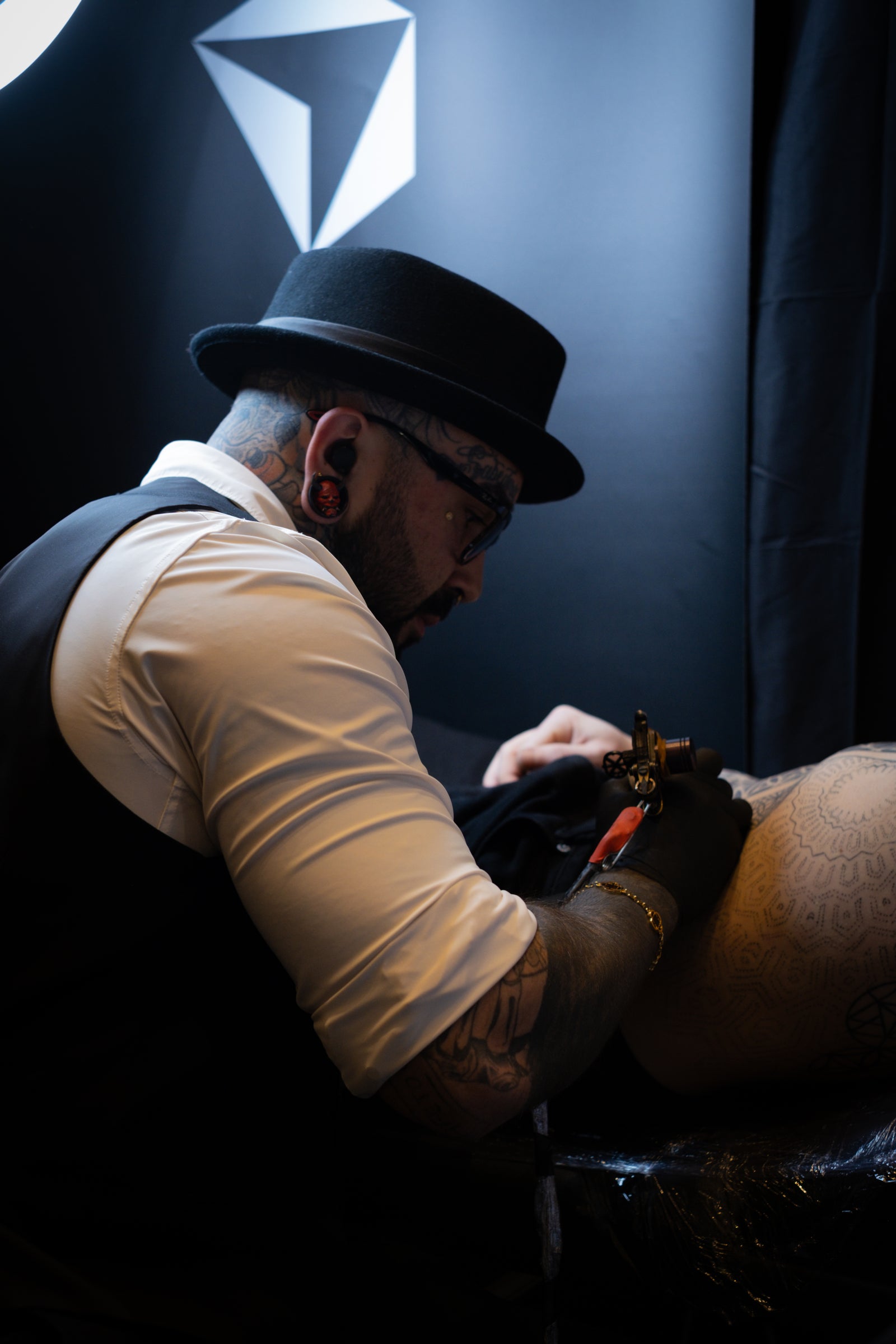
As Ink Society has grown, Victor has continued to work as a tattoo artist. He still develops projects for clients, studies, draws and protects the artistic career that existed before the collective.
At the same time, he is responsible for decisions that affect a wider group: supporting the team, handling disagreements, developing new projects and trying to make sure that growth does not weaken the original idea.
[ISC_MEDIA:image-05]
The difficulty is not simply the number of tasks. Tattooing and leadership require different forms of attention. One asks for deep focus on a single body and design. The other requires awareness of people, systems and consequences that may only become visible months later.
Much of the collective's creative direction has still depended on Victor. That helped maintain consistency while the project was young, but it also revealed a limit. If Ink Society is to become larger than its founder, ideas and responsibilities must increasingly be shared without losing the standards that shaped them.
"I don't want to lose the feeling that it still isn't perfect. That is what makes me keep improving it."
That sentence reflects a practical kind of ambition. Ink Society has achieved a great deal in a short period, but presenting it as complete would remove the pressure to keep learning. The point is not to celebrate imperfection for its own sake. It is to remain honest about the work still required.
One idea, three cities
Dublin was the starting point. Florianópolis and Cork followed, taking the name into three cities with different teams, audiences and local realities.
[ISC_MEDIA:gallery-06]
Expansion proved that the idea could exist beyond its first address. It also made the central challenge more visible: what should remain consistent when a collective enters a new place?
Visual identity is the easier part to reproduce. Culture is harder. A new location must create its own relationships and respond to its own city, while preserving the principles that make the name credible: safety, shared knowledge, professional care and room for artists to develop independently.
That means the objective is not to produce identical studios. It is to build recognisable standards without removing local character. The real measure of expansion is not simply how many locations carry the logo, but whether the experience inside them still supports the people doing the work.
The three locations are an early proof that the system can travel. They are not evidence that every question has been solved. Each new step increases the need for clearer structures, stronger communication and leaders who can protect the collective without depending on Victor for every decision.
Beyond the studio
As parts of the day-to-day operation began to be shared, Victor found more room to think beyond the immediate needs of the studios. Two of the first results are Ink Society Apparel and the Journal.
[ISC_MEDIA:diptych-07]
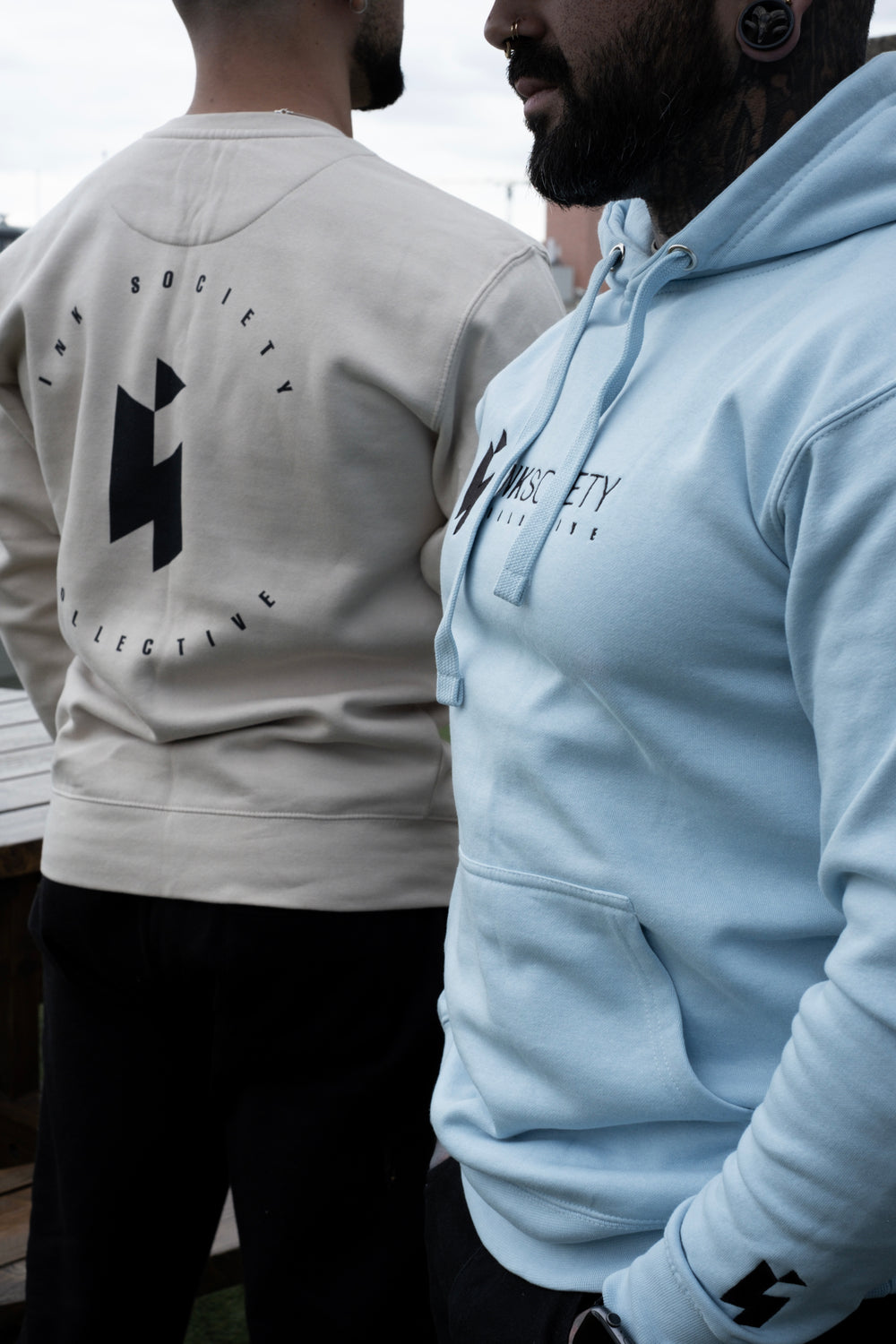
Apparel gives the collective a way to explore its visual culture outside tattooing. For the project to matter, the clothes cannot be reduced to merchandise with a logo. The concept, print, material and fit have to receive the same attention given to an original tattoo project.
The Journal serves a different purpose. Social media is useful for visibility, but it rarely provides enough space to document how artists think, how projects are built or how a creative institution changes over time. The Journal is intended to preserve those stories and make the collective's knowledge easier to find, understand and revisit.
Neither project is being presented as finished. They are extensions under construction, guided by the same principle as the studios: new branches should deepen the identity of Ink Society rather than simply add more activity around the name.
Still being built
Eighteen months after its official beginning in January 2025, Ink Society has grown from one Dublin studio into a collective operating across three cities, with a wider team and new projects taking shape beyond tattooing.
Victor does not offer a precise prediction for where it will be in five years. The recent pace of change makes certainty difficult. What he does state clearly is the size of the ambition.
"The goal is to become the biggest in the world. I don't think that is dreaming too big."
[ISC_MEDIA:image-08]
The statement matters because it comes with an understanding of the risk. Growth alone would not prove that Ink Society had succeeded. The harder task is to expand while protecting the reason it began: to create places where artists can do serious work, remain themselves and know they do not have to build alone.
Image credits
Photography to be credited on publication. Archive images courtesy of Victor Franceschi / Ink Society.
Last reviewed: July 2026