
Fernando M. Mattar: How a Work Learns to Grow
Brazilian visual artist Fernando M. Mattar builds sculptures where roots, soil, wood and digital fabrication meet.
In a recent group of three sculptural works, Fernando M. Mattar built structures for a living plant and waited to see what its roots would do. At first, he tried to direct their path. The roots ignored the plan. They adapted to the architecture, found their own routes and altered the composition over time.
Mattar did not treat that refusal as a defect. He changed the terms of the work. Control gave way to collaboration; the plant was no longer an element placed inside a finished object, but an active participant in its construction.
“Nature is not represented. It actively participates in building the work.”
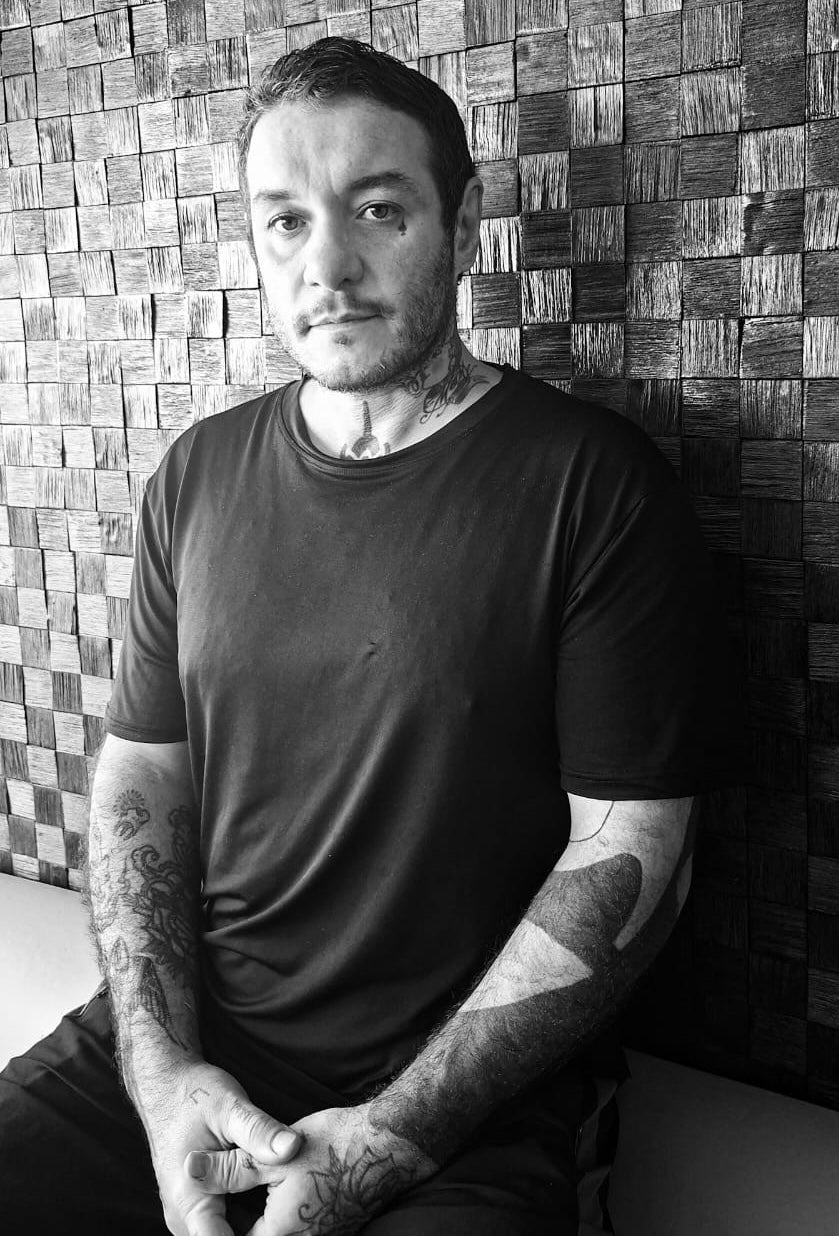
That shift offers a way into the practice of a Brazilian visual artist whose work is built around encounters: root and concrete, soil and acrylic, the irregular intelligence of growth and the programmed precision of a machine. Based in Uberaba, Minas Gerais, Mattar describes his practice as artistic research into matter, nature and fabrication. Sculpture is now at its centre, but painting, tattooing, drawing and digital processes all remain present in the way he thinks.
[ISC_MEDIA:image-01]
Art before it was a career
Mattar was born and raised in Uberaba, where art arrived first as part of family life rather than as a distant profession. His father, grandfather and uncle painted or photographed. His grandfather kept a studio at home, and Mattar spent hours beside him, drawing and painting.
Long before he had a defined medium or an idea of what an artist’s career could look like, making images had already become a method of attention. He puts it simply:
“Creating was always a natural way of looking at the world and investigating it.”
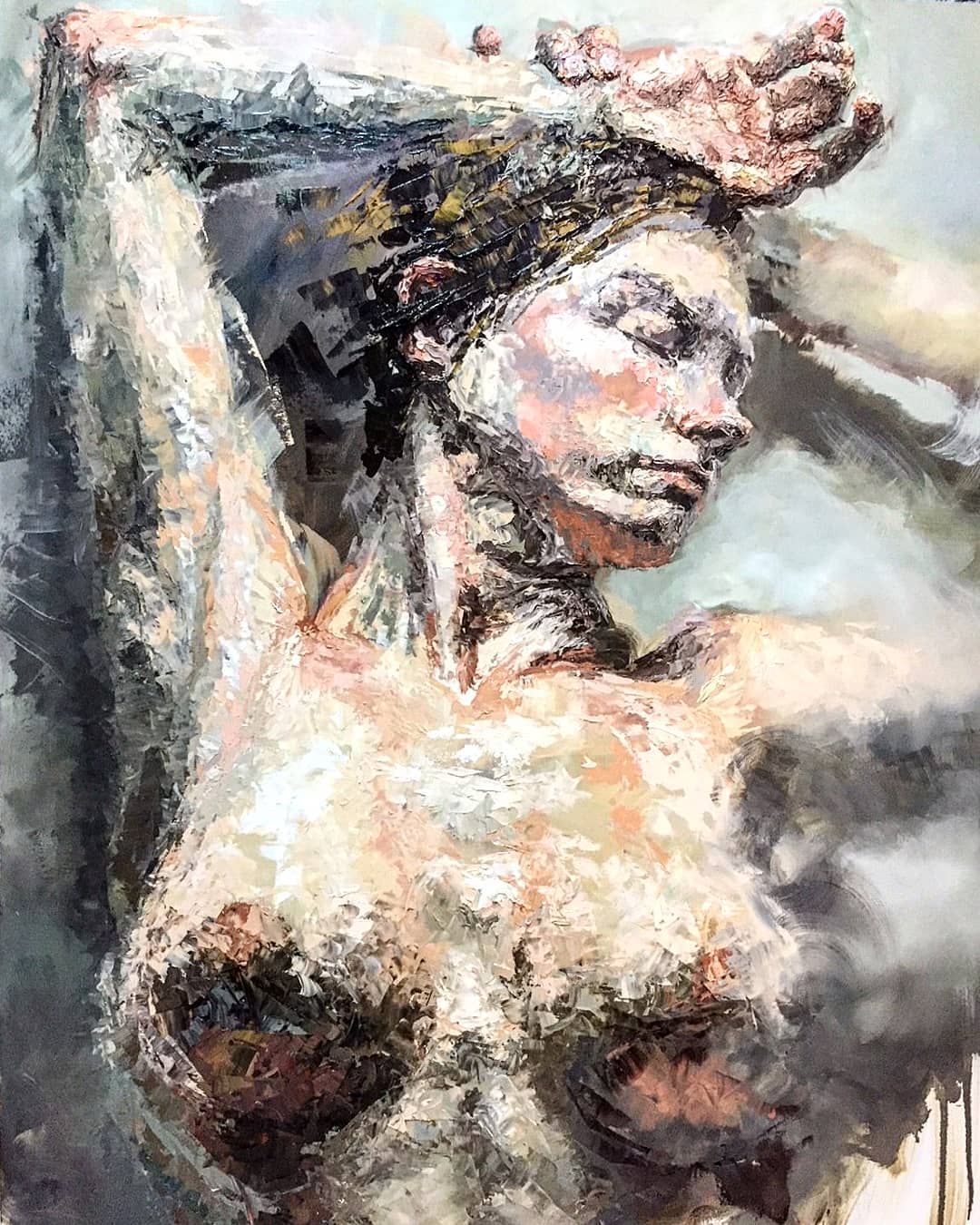
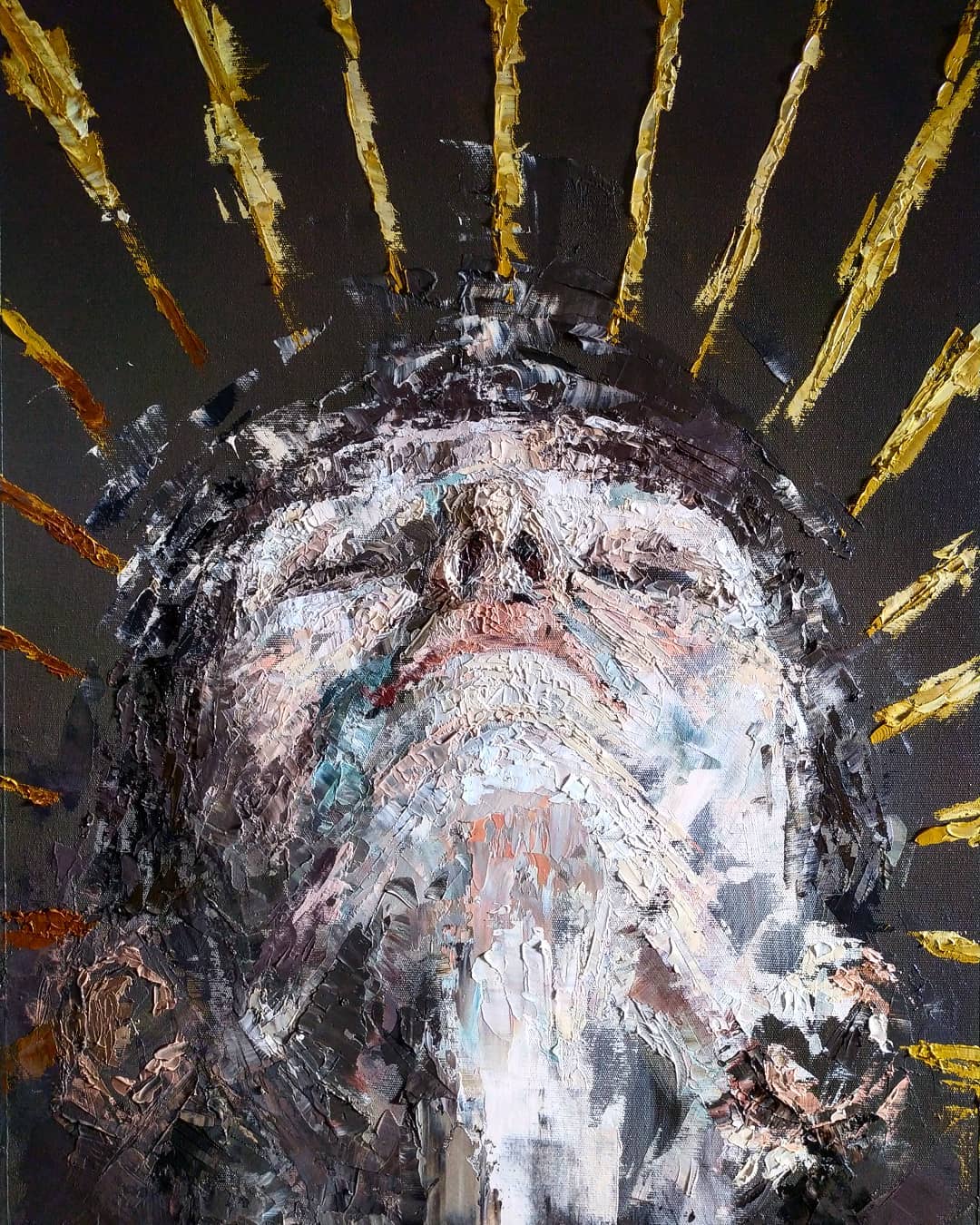
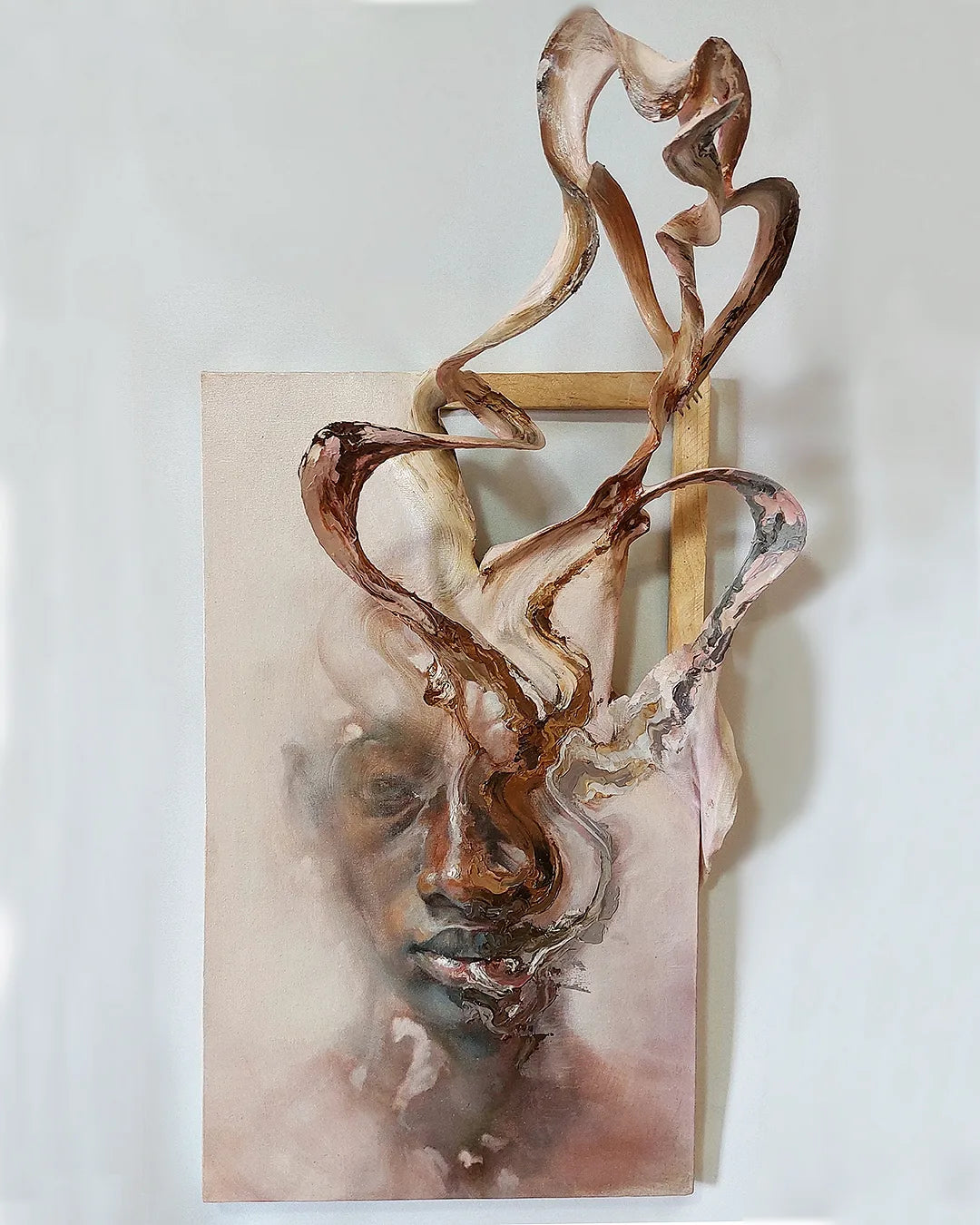
Across his figurative paintings, the body is less a stable likeness than a field of pressure. Dense paint breaks skin into shifting planes; gestures push towards the edge of the canvas; faces emerge from atmosphere rather than sitting cleanly upon it.
[ISC_MEDIA:image-02]
He lived in Uberaba until the age of 20, before moving to São Paulo. Experiences across Minas Gerais, Tocantins and São Paulo later gave him contrasting vocabularies for that investigation. In Minas Gerais and Tocantins, he encountered manual cultures, artisans and river communities whose relationships with matter, time and the natural world felt direct. São Paulo brought industrial systems, digital fabrication, machinery and speed. His present work does not ask one world to defeat the other. It asks how they might occupy the same space without losing their differences.
[ISC_MEDIA:image-03]
What tattooing made possible
Tattooing entered Mattar’s life when he was about 15. A studio opened beside a gallery near his school, and he became friends with the tattoo artists who worked there. In the interior of Brazil, at a time when internet access offered far fewer windows into professional art, tattooing made an artistic life visible and concrete.
For Mattar, tattooing made a professional art practice imaginable.
“Tattooing showed me that drawing could become a profession.”
It also became a demanding school. Working on skin sharpened his understanding of colour, composition and pictorial construction, while the responsibility of the medium required discipline. A line or decision could not be treated casually.
Today, tattooing is part of the history of his practice rather than its primary destination. He works mainly through sculpture, painting and installation. Yet the years spent constructing images for the body remain embedded in how he organises form, surface and visual weight.
When the surface was no longer enough
Mattar does not describe his movement from drawing to painting, tattooing and sculpture as a sequence of breaks. Each medium expanded a question that the previous one could no longer contain. Tattooing introduced a new support. Later, certain ideas demanded volume, physical matter and the space around an object.
His paintings became denser. Ceramics and fibreglass followed. Over time, roots, soil, wood, concrete and transparent acrylic entered the work, alongside components shaped through digital modelling and fabrication. Painting did not disappear in this transition. It survives in his handling of colour, light, composition and surface.
He describes the shift this way:
“Instead of painting a landscape, I try to create a landscape, a space in which each material takes part in constructing the image.”
[ISC_MEDIA:image-04]
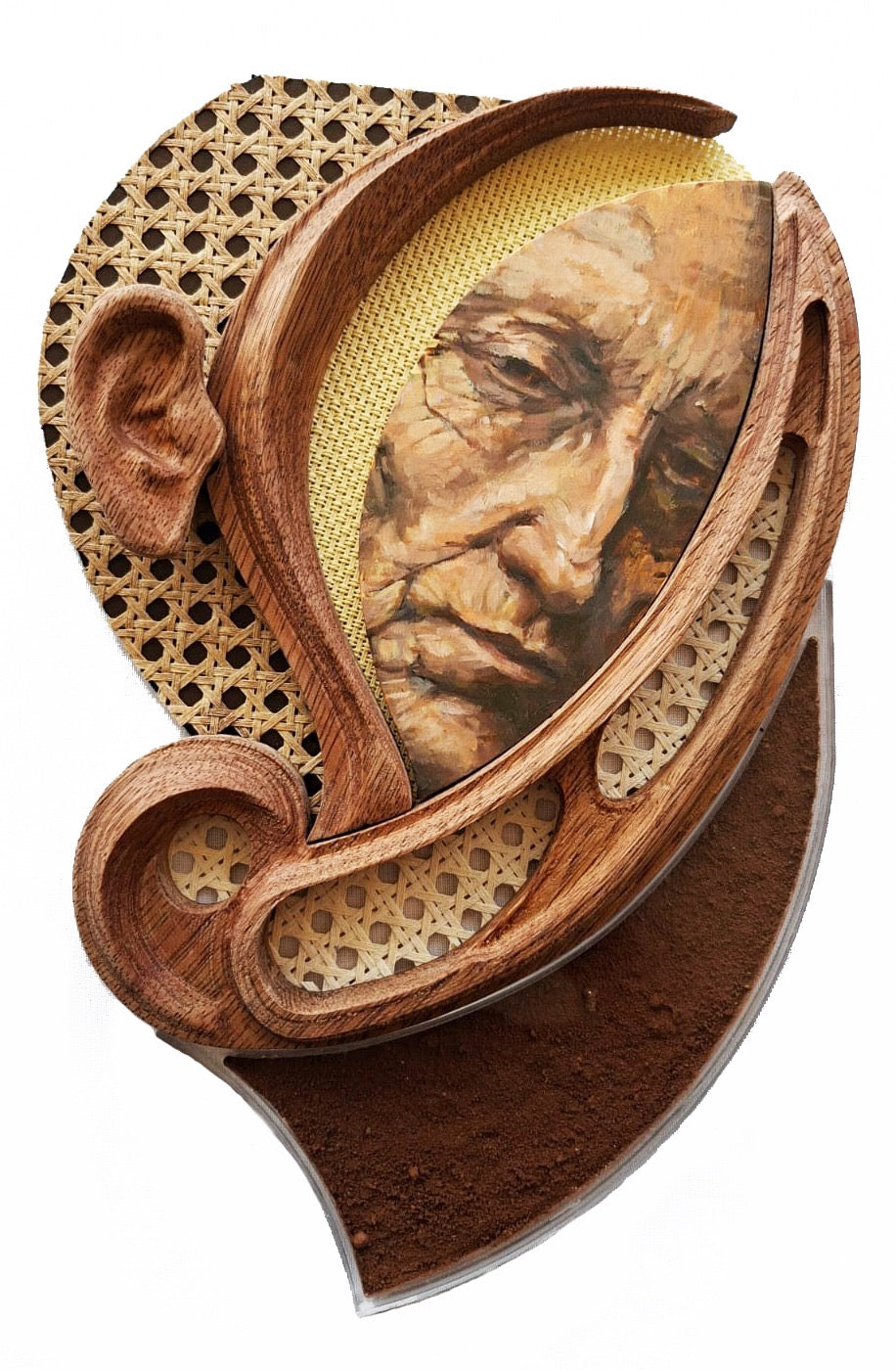
In his wall-based works, that transition becomes literal. Painted faces remain, but their contours leave the rectangular support and enter layered structures. The image no longer stops at the edge of a surface; it becomes an object with its own shadow, depth and surrounding space.
[ISC_MEDIA:image-05]
Materials with different clocks
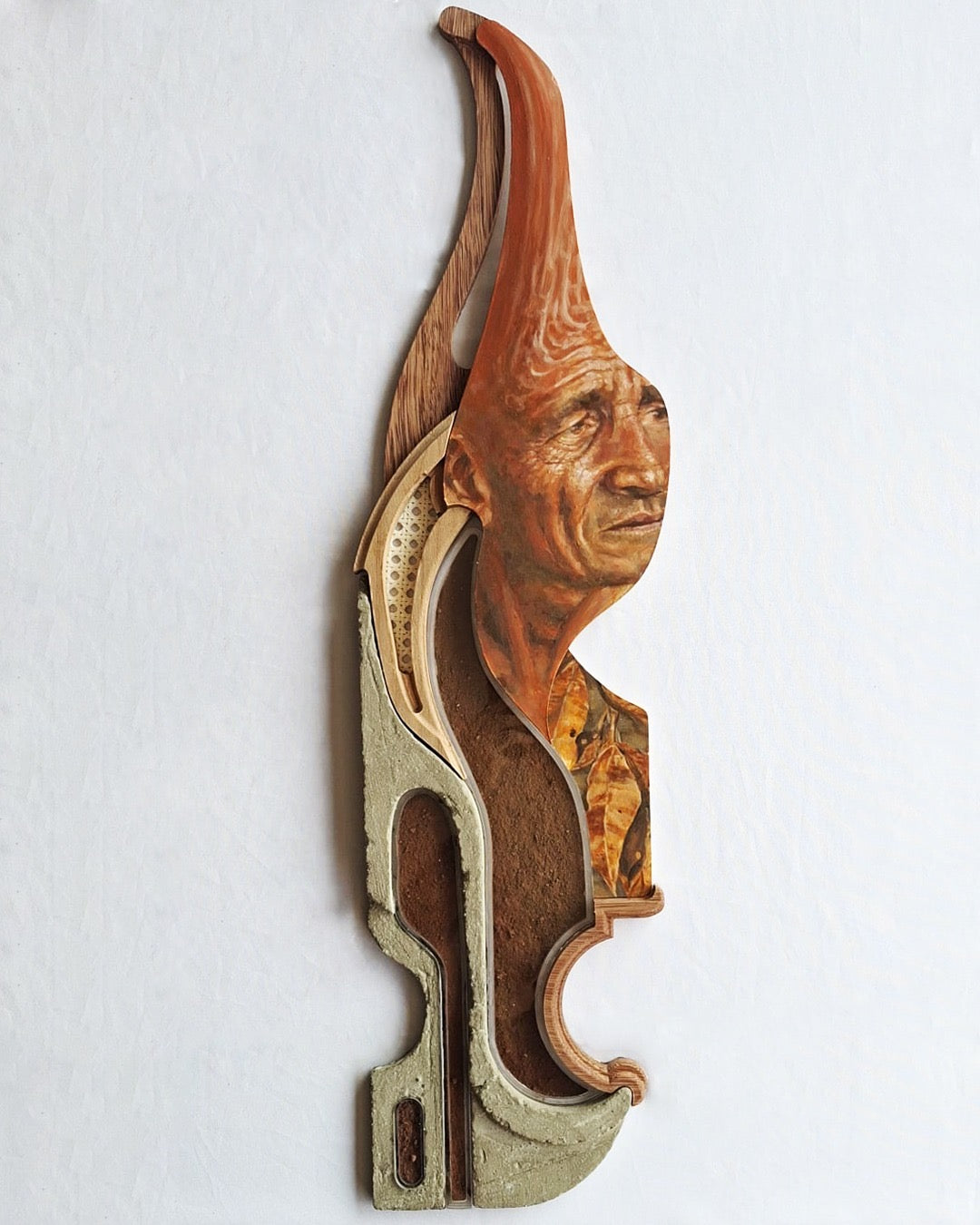
Mattar’s sculptures can appear like fragments of landscape: sometimes attached to a wall, sometimes occupying space as independent objects. A rough plane of concrete may sit beside the grain of machined wood. Clear acrylic exposes what another material would conceal. Soil and roots introduce a duration that cannot be manufactured on command.
He finds some materials during walks, journeys or visits to rural areas; others come from timber yards, builders’ merchants and industrial suppliers. Origin alone does not determine value. A root, a sheet of acrylic and a concrete component can all become meaningful, but they carry different histories. Wood contains the memory of a tree. Soil is bound to territory. A root records growth. Concrete and acrylic speak of human construction, industry and contemporary infrastructure.
These differences are not smoothed away. Mattar is interested in the friction between them: rough and polished, opaque and transparent, organic and manufactured. His central concern is how materials, techniques and modes of production can coexist without one erasing the other.
“My research is ultimately about coexistence: how different times, materials and ways of making can share the same space without losing their singularity.”
The machine as an extension of the hand
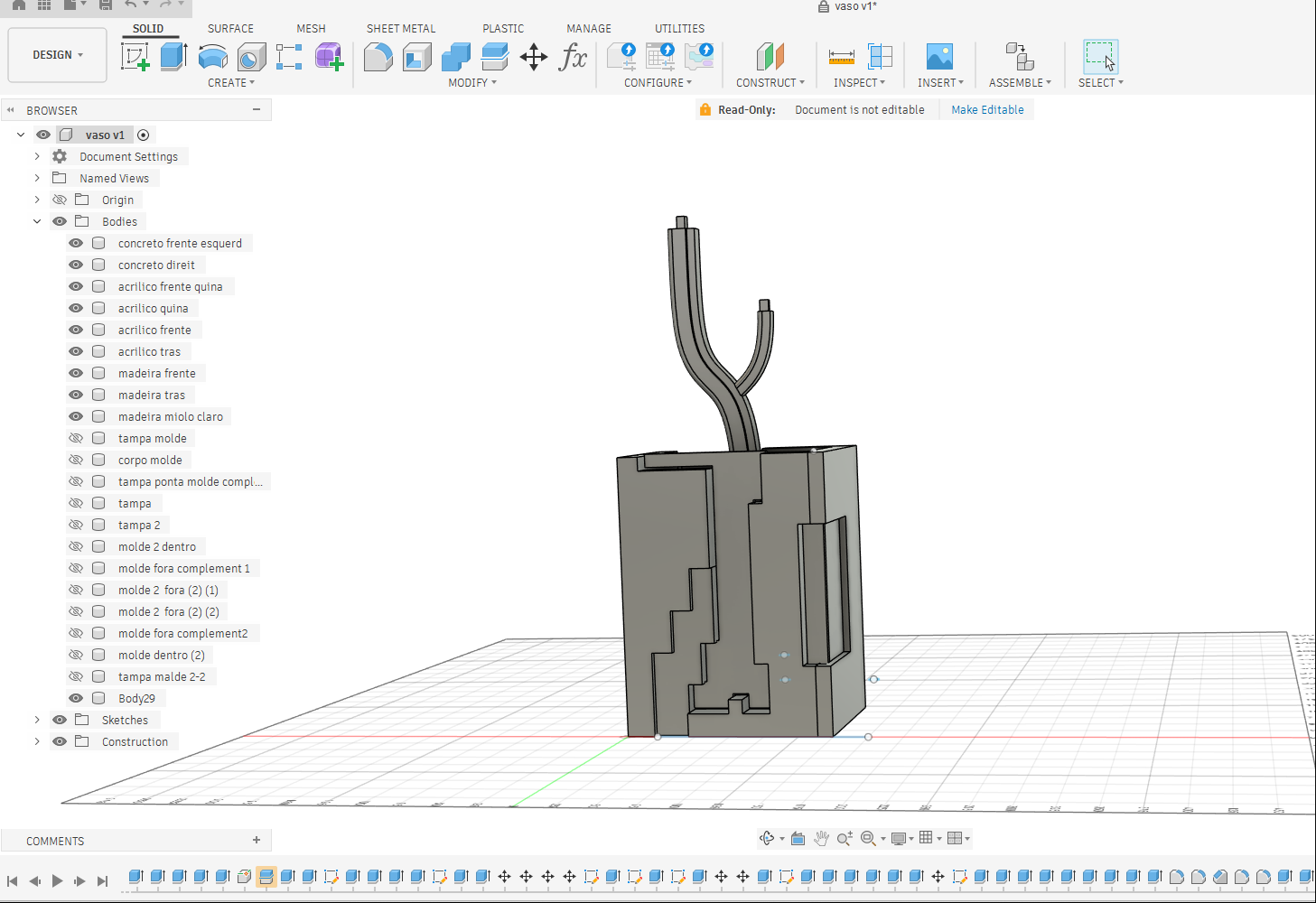
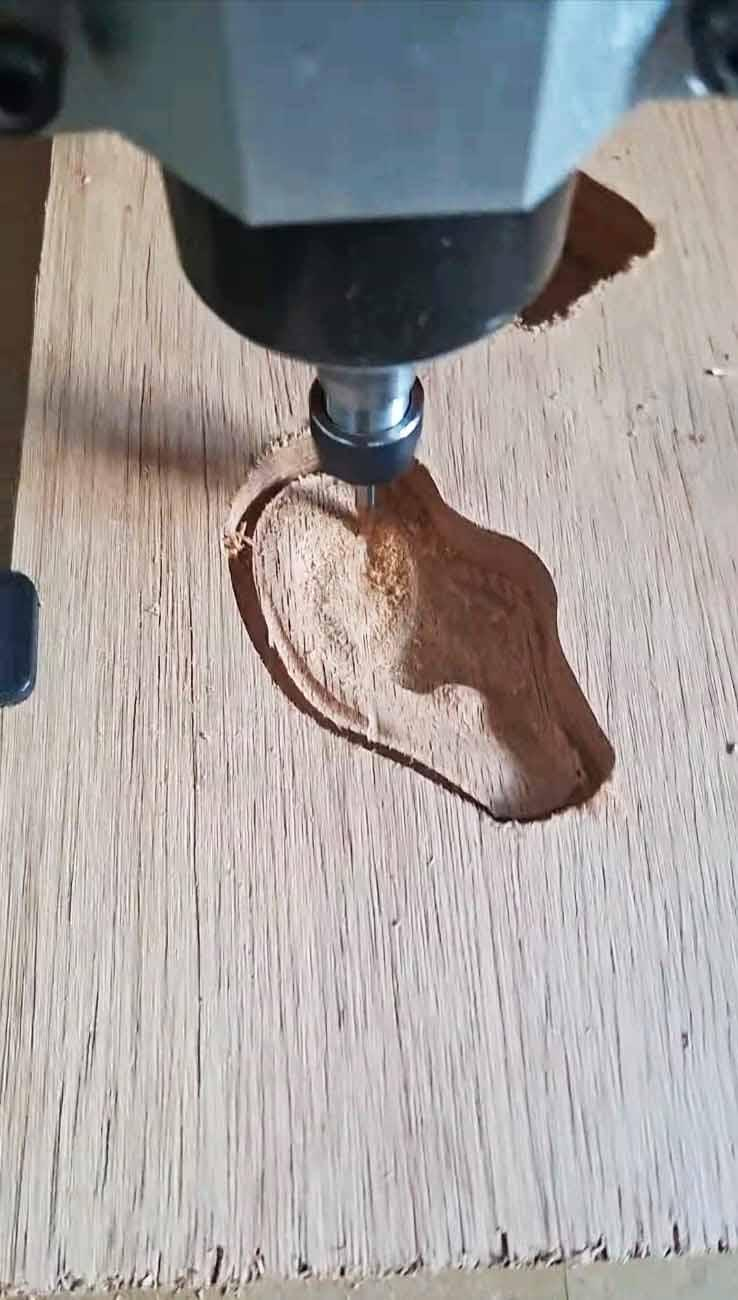
Digital fabrication is one of those ways of making. Mattar uses 3D modelling, CNC machining, 3D printing and related processes to test joints, develop structures and produce components that would be difficult to realise by hand alone. For him, the machine is not the opposite of craft. It is an extension of the hand, another instrument through which an idea meets the behaviour of matter.
[ISC_MEDIA:image-06]
That position also shapes his use of artificial intelligence. Mattar treats AI as a form of dialogue and technical support: a way to investigate structural solutions, material resistance, manufacturing knowledge or software optimisation. He draws a clear boundary around authorship. The tool does not decide what the work should mean, which possibility should be pursued or when a result is convincing.
“AI does not make the artwork. Intention, selection, criticism and the final decisions remain with the artist.”
[ISC_MEDIA:image-07]
What mycelium taught him about control
The most revealing part of an artistic process is not always the point at which a technique works. Mattar has also experimented with mycelium, a branching network of fungal threads. Moulds designed to guide growth repeatedly produced incomplete results. Some areas colonised; others remained fragile or stopped developing.
The failed tests changed his method. Mycelium could not simply be instructed to conform to a drawing. The material was participating in the decision. Design, in this context, became negotiation rather than imposition.
Mattar now works through tests and prototypes, studying how a material behaves before deciding how far to intervene. He is willing to abandon a route when the work demands it. Failure is not romanticised, but neither is it discarded as useless: an unsuccessful attempt can expose a material’s limits, correct an assumption and generate the next solution.
Mapping a living territory
The title of Mattar’s 2026 exhibition at Galeria de Arte Rachel Machado in Uberaba, Cartografia viva: da forma ao lugar (Living Cartography: From Form to Place), brings many of these ideas together. Here, territory is not understood only as geography. It is produced through relationships between matter, memory, space and ways of inhabiting.
The exhibition gathers works from different moments rather than presenting a single piece as a definitive statement. For Mattar, that path is important. The works become transforming territories: records of encounters among materials of different origins, as well as between the natural processes and fabrication systems that shape contemporary life.
His earlier use of the human figure has receded, but its concerns have not vanished. Memory, time and relationship have migrated into the materials themselves. The figure remains as a kind of structure or trace, while soil, wood, roots, concrete and acrylic carry the narrative.
A sculpture that appears to have grown
For an artist who allows living and resistant materials into the process, a completed work cannot mean total control. Mattar considers a work resolved when it can sustain its investigation without an explanation beside it: when the forms, proportions, surfaces and relationships no longer feel arbitrary, and another intervention would add noise rather than clarity.
Visual impact is only the first point of contact. He wants a work to keep opening as someone spends time with it, revealing decisions, tensions and histories that are not exhausted by a first glance.
One question guides Mattar’s next works:
“How can I build a work that seems to have grown, rather than simply been fabricated?”
He is not trying to disguise the machine or imitate nature. The ambition is more difficult: to let wood, concrete, soil, roots, mycelium and industrial or digital fabrication belong to one organism while each remains recognisably itself. Every work answers only a small part of that question and, if it succeeds, creates another.
What emerges is not a reconciliation in which difference disappears. It is a living arrangement: provisional, material and alert to resistance. In Fernando M. Mattar’s work, the landscape is not something to look at from a distance. It is something assembled, negotiated and allowed to change.
Image credits and publication note
Relatos do Interior - O Ancião (2026): acrylic, cedar, straw, earth and oil painting on wood; 38 × 28 × 3 cm. Remaining artwork images were supplied for editorial review; their titles, dates, dimensions, media, photographer credits and publication permission should be confirmed before publication. Process images were supplied by Fernando M. Mattar. Interview responses were translated from Portuguese and edited for clarity; quotations should receive Fernando’s final approval before publication.
Last reviewed: July 2026